Gifting has never been easier
Perfect if you're short on time or are unable to deliver your gift yourself. Enter your message and select when to send it.


Tips for keeping terracotta potted plants properly hydrated.

Terracotta's porous nature is both its greatest strength and its main challenge. The clay breathes, allowing air to reach roots and excess moisture to escape. Most plants appreciate this. But that same porosity means soil dries faster than it would in plastic or glazed ceramic.
Understanding how water moves through terracotta helps you work with the material rather than against it.

The method is simple. Water slowly and evenly over the soil surface until water flows freely from the drainage hole at the bottom. Let the pot drain completely before returning it to its saucer — don't let it sit in standing water.
Before watering again, check the soil. Insert your finger an inch or two into the potting mix. If it feels dry at that depth, it's time to water. If it still feels moist, wait another day or two.
That's the baseline. The sections below cover why terracotta behaves differently from other materials and how to adjust your approach.

Unglazed terracotta absorbs water through its walls. When you water a plant in a clay pot, some of that moisture moves into the pot itself before evaporating through the outer surface. This is why terracotta feels cool to the touch after watering and why you'll sometimes see a visible waterline on the outside of the pot.
Because unglazed terracotta is porous, potting mix usually dries faster in it than it would in plastic or glazed ceramic. This can be helpful for plants that prefer to dry slightly between waterings, but it does not replace good drainage or careful watering.
For plants that like consistent moisture, the trade-off is more frequent watering or adjustments to slow evaporation.
Yes, and it works well. Bottom watering involves setting the pot in a shallow container of water and letting the soil absorb moisture upward through the drainage hole. The plant takes what it needs, and you avoid the guesswork of pouring from above.
With terracotta, bottom watering has an added benefit: the pot itself absorbs water during the soak, which means it draws less moisture from the soil afterward. A saturated pot acts as a small reservoir rather than competing with the plant for water.

Set your terracotta planter in a basin, tray, or sink with a few inches of room-temperature water. The water level should reach about a quarter to a third of the way up the pot.
Let it sit for 20 to 30 minutes. Terracotta takes longer than plastic because the clay is also absorbing water. Check the soil surface. When it feels damp, the pot has absorbed enough.
Lift the pot and let it drain completely before returning it to its saucer. Don't let the pot sit in standing water for extended periods, as this can lead to root rot despite terracotta's drainage advantages.

Bottom watering doesn't flush out mineral salts that accumulate in soil over time. Every four to six weeks, water thoroughly from the top until it runs out the drainage holes. This washes away buildup that can damage roots and leave white residue on the pot's surface.
If your pot has developed heavy mineral deposits, our guide on how to clean terracotta pots covers removal methods.

Photo from @alysonsimplygrows
If your plants are drying out faster than you can keep up with, a few adjustments can help without sacrificing terracotta's benefits.
SOAK NEW POTS BEFORE PLANTING
Dry terracotta is thirsty. A brand-new pot will absorb a significant amount of water from the soil before any reaches the roots. Soak new pots in water for 30 minutes to an hour before planting. This saturates the clay so it starts full rather than competing with your plant.
CHOOSE A LARGER POT
Small pots dry out faster than large ones because there's simply less soil to hold moisture. If a plant is drying out every day or two, it may need a larger container. Move up one size and see if the watering frequency becomes more manageable.
USE A MOISTURE-RETENTIVE SOIL MIX
Amend your potting mix with materials that hold water longer. Coconut coir retains moisture better than peat and rehydrates more easily if it dries out completely. A higher proportion of compost or vermiculite also increases water retention.
For plants that need both drainage and moisture, a mix of standard potting soil, perlite, and coconut coir works well.
ADD MULCH TO THE SOIL SURFACE
A thin layer of mulch on top of the soil slows evaporation from the surface. Pebbles work well, as does moss or shredded bark. This is especially helpful for outdoor pots in full sun or windy locations.

Clustering pots creates a more humid microclimate. The plants shelter each other from sun and wind, and the moisture released by one pot benefits its neighbors. A grouping of three or five terracotta planters will dry out more slowly than a single pot standing alone.
Terracotta in full sun heats up and dries out quickly. If a pot is struggling, try relocating it to a spot with morning sun and afternoon shade, or move it back from a south-facing window.
Place your terracotta pot inside a larger decorative container without drainage. A woven basket works well for this, as do ceramic or metal vessels. The outer container acts as a humidity chamber, slowing evaporation from the clay walls. Just be careful not to let water pool at the bottom. Lift and check periodically.

Terracotta's porosity helps prevent overwatering, but it doesn't replace proper drainage. Every pot needs at least one unobstructed drainage hole at the bottom. If your pot came with a plug, remove it.
When watering, continue until water flows freely from the drainage hole. This ensures the entire root zone is moistened, not just the top layer. Empty the saucer beneath the pot after 30 minutes so the roots aren't sitting in standing water.
For pots without drainage holes (decorative cachepots, for example) don't plant directly in them. Use them as outer containers for a properly draining pot inside.
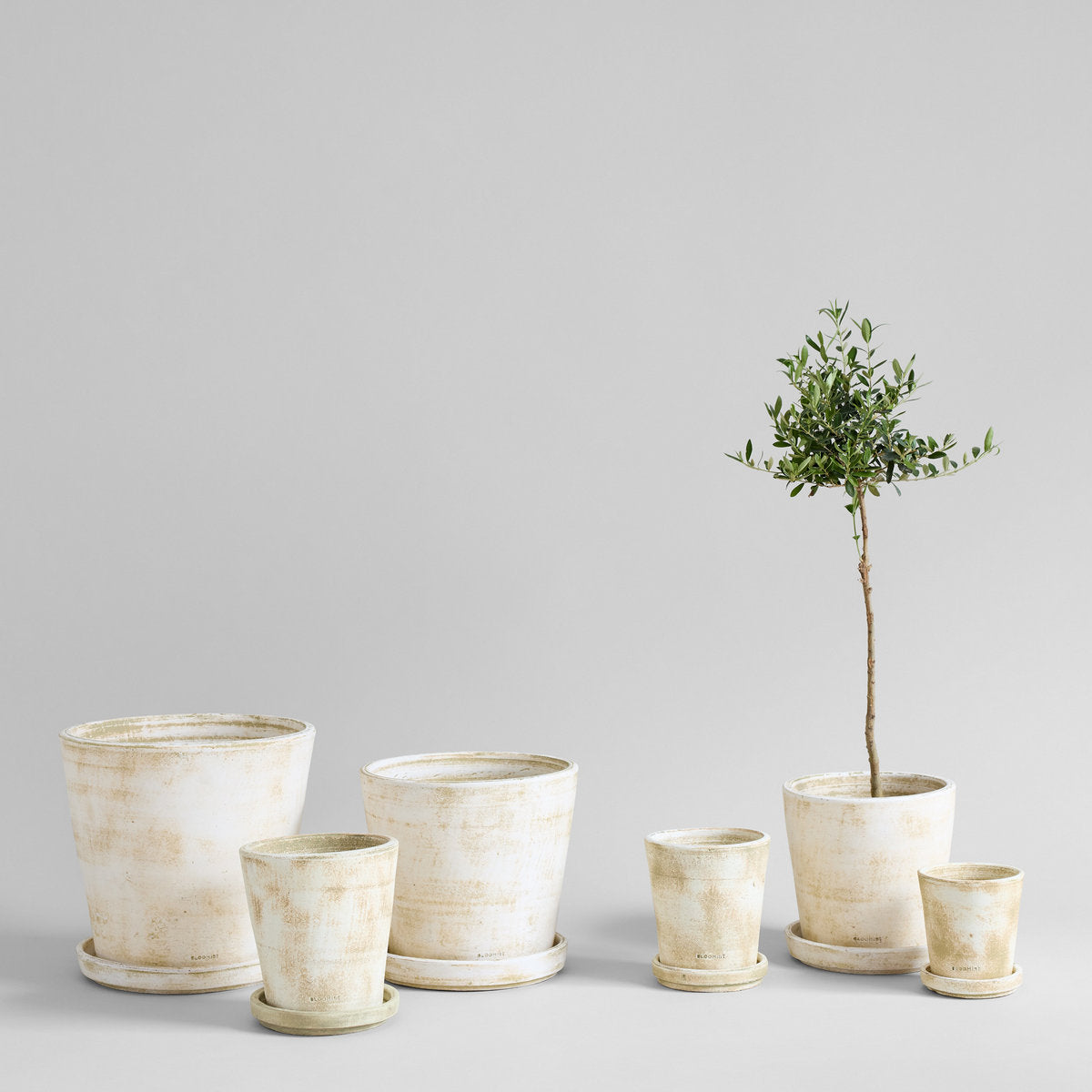
Our Basic Planter comes with a drainage hole and a matching saucer, sized to catch runoff without letting the pot sit in water.

Terracotta is often easiest with plants that tolerate some drying between waterings. Cacti, succulents, snake plants, rosemary, and thyme are safe choices. Plants like pothos, philodendrons, and fiddle leaf figs can also do well in terracotta, but they usually need closer attention to watering than they would in plastic.
Plants that prefer consistently moist soil, like ferns and calatheas, may struggle in terracotta unless you're prepared to water more frequently.
For guidance on pairing plants with clay vessels, see The Best Plants for Terracotta Pots.

If you're underwatering, you'll notice soil pulling away from the pot edges. Leaves wilt, curl, or turn crispy. The soil becomes bone dry and hard to rewet.
Overwatering shows up differently. Soil stays wet for more than a week. Lower leaves are yellow. Stems may turn mushy or the soil develops a musty smell. Fungus gnats hovering around the pot are another sign.

Watering needs to adapt to the seasons. In spring and summer, plants grow actively and use more water. Longer days and warmer temperatures also increase evaporation from both soil and pot.
In fall and winter, growth slows. Cooler temperatures and shorter days mean soil stays moist longer. Reduce watering frequency accordingly. Many houseplants need water only every two to three weeks during winter.
Outdoor terracotta pots face additional challenges. For guidance on protecting pots through cold months, see How Cold Weather Affects Terracotta and How to Care for It.
Yes. Bottom watering works well with terracotta and has the added benefit of saturating the pot itself, which reduces how much moisture the clay pulls from the soil afterward. Soak for 20 to 30 minutes, then let the pot drain completely.
Soak new pots before planting, use a moisture-retentive soil mix, add mulch to the surface, group pots together, and move them out of direct afternoon sun. Choosing a slightly larger pot also helps, since more soil holds more water.
It depends on the plant, pot size, and conditions. Check the soil rather than following a fixed schedule. When the top inch or two feels dry, it's time to water. In summer, this might be every few days. In winter, every week or two.
Yes. Drainage holes are essential for healthy roots. Water should flow freely through the pot and out the bottom. If your pot doesn't have a drainage hole, use it as a cachepot with a draining pot inside.
Neither is universally better. It depends on the plant. Terracotta's breathability benefits plants prone to overwatering and root rot. Plastic retains moisture longer, which suits plants that like consistent dampness. Choose based on what your plant needs.




Your Shopping Cart is Empty
Browse our latest collection or check your saved favorites to add more items to your cart.




Manage your profile, track your orders, and enjoy a seamless shopping journey with us.
